Draft2Digital Alternatives For Erotica Authors

Hello my lovelies,
It's independent bookstore day and this one is for my fellow erotica writers who are looking for alternatives to Draft2Digital after Draft2Digital decided to penalise anyone making less than $100 / year with their books.
If you are not a writer but an erotica enjoyer, the overview might give you an idea for where to look for the indie smut and where so-called "taboo erotica" is even still published.
Smashwords
Haha, joke's on us, Smashwords was bought by Draft2Digital in 2022 and if we want access to the Smashwords store, we gotta stay with Draft2Digital 🤡
Smashwords is important to the erotica writing community as a well-known marketplace for indie erotica that also offers the so-called "taboo" genres like incest and non-consent. Loosing access to Smashwords is the only reason I haven't immediately closed my account with Draft2Digital.
If you are an erotica writer, Smashwords is likely your biggest sales platform along with Amazon. I wouldn't recommend opening an account with Draft2Digital just to access Smashwords because the $20 activation fee + $12 penalty if you don't make $100 in your first year is mental, but if you already have an account and you can afford the $12 or even make more than $100 / year, it might be worth staying just for that marketplace. But Draft2Digital sucks for penalising low earning authors and they deserve to lose users and sales.
Amazon
Draft2Digital's shitty fees are going to sweep a lot of indie writers back into the gaping maw of Amazon. Because it's still free and Amazon also offers the common 70% of sales price, meaning for a $2.99 eBook I get $2.09 and the platform is huge: too many people still buy their eBooks on Amazon. Amazon always made sense from a profit standpoint. It's easy to use. But Amazon is fucking evil, mate.
I have my eBooks on Amazon KDP (Kindle Direct Publishing) too. "Going wide", the indie publishing term for leaving Amazon's locked system, cost me when I first decided to do it because I made more with Kindle Unlimited reads than I did through the other retailers. But I would always do it again. Putting all your eggs in Amazon's basket is giving them far too much control. Amazon can block your books and there is nothing you can do about it. If you use Kindle Unlimited or Audible, you cannot offer your books anywhere else. Customers can and do read or rip your eBook and just return it, meaning you won't see any royalties.
I know it is tempting to just crawl back to Amazon. But consider this:
Pros
✅ Large platform = large potential audience for sales
✅ Ease of use: creating an eBook with zero knowledge is fool-proof
Cons
🚫 Amazon can block your books without warning, without explanation, and without ever letting you talk to a human to appeal. I had to publish one of my books five times or so, probably because it contained the keyword "virgin" in the description.
🚫 Return policy makes it super easy to pirate your eBooks.
🚫 Kindle Unlimited and Audible will lock you in, meaning you can't sell your book anywhere outside Amazon. They make you dependent on their locked system.
🚫 AI slop is allowed, as per Amazon's / KDP's content guidelines: "We require you to inform us of AI-generated content. You are not required to disclose AI-assisted content."
🚫 Kindle Unlimited payments are super intransparent. It's a seemingly random amount divided by all authors whose works were read via KU in a given month, meaning AI slop that is read via KU drops the payout amount for everyone.
🚫 Has no clear content guidelines. Erotica is allowed but they might block your book for whatever reason.
🚫 If you label your book correctly it will be thrown into the "adult dungeon" and never see the light of day. "Adult dungeon" means it can't be found via regular search.
🚫 You cannot opt out of Amazon's AI generated recaps of your book.
Kobo
You may know Kobo as an eBook reader or an eBook store but they also have their own self-publishing platform called Kobo Writing Life. I have a Kobo account but I have only used it to publish a single title directly. Kobo has a subscription service similar to Amazon's Kindle Unlimited, but it doesn't require exclusivity to enroll your book, you can still sell it everywhere else. Kobo's royalties are industry standard at 70% retail price for books priced at $2.99 or above. But they have a hefty payment threshold at 50 Canadian dollars, which equals roughly 35 US dollars or 30 Euros and British pounds. Kobo's payout system for their subscription service Kobo Plus is much more transparent than Amazon's, with the amount earned is determined by Kobo's subscription revenue and the share of total time spent reading in a given month. Authors get 60% of the revenue per minute read of their book. Subscription services are usually paid for by the creators because we make a fraction of what we would make with a sale. But it can be a good way for authors starting out because the hurdle of giving the book of an unknown author a read is much lower if it's through a subscription and at least with Kobo, you can still publish elsewhere.
So what is Kobo saying about erotica?
"Adult or explicit content depicting acts that are illegal or that Kobo determines to be sexually exploitative are prohibited. This includes material that portrays or contains direct or indirect references to pornography, pedophilia, incest, bestiality, exploitation and sexual violence or force. Kobo may close accounts and report illegal material to the relevant authorities."
Rakuten Kobo Content Policy, October 5th, 2023
So Kobo doesn't allow incest, bestiality, and non-con. "References to pornography" is pretty vague, as it often is in these content guidelines. Does it mean that characters can't watch porn or enjoy an erotic photograph? Does it mean that exploitation in porn can't be referenced as a sexy thing? But overall, vanilla and even a lot of kinky erotica seems to be allowed, which is a plus.
But now comes the thing that has stirred controversy in the indie publishing world: Kobo's use of AI technology.
"Kobo agrees that Works will not be used to train generative AI technologies. Kobo may utilize artificial intelligence, machine learning, deep learning algorithms or similar technologies (AI technologies), to read, analyze, and process the Works for the following purposes: (a) enhancing the discoverability of the Works by categorizing and tagging content appropriately, and providing a personalized experience and targeted recommendations for customers; (b) evaluating the suitability of the Works for sale on Kobo’s platform and ensuring adherence to Kobo’s Terms of Service; (c) generating resources to assist prospective customers in making informed decisions, including, but not limited to creating keywords, promotional content, targeted advertisements, customer engagement strategies, and other materials designed to enhance the sales of the Works; and (d) enhancing the experience of a purchased book by providing recaps, reading assistance, and accessibility features."
Kobo Writing Life Terms of Service, Section 2.3
Fellow author Delilah Waan has broken down this part of Kobo's terms of service in a video which I highly recommend you watch in full if you are invested in this topic. The big plus is that Kobo explicitly states that our books won't be used to train generative AI. However, they plan to run our books through their AI to create recaps. On BlueSky, their social media team said the (forthcoming) recap feature will be opt-out but in my opinion, feeding our work to AI should always be opt-in. Of course, adoption is always lower if something is opt-in but if authors really want this feature, they will opt-in. My guess is that most don't. Categorisation and tagging won't be opt-out, as Delilah was told by Kobo Writing Life's director Tara Cremin. According to CEO Michael Tamblyn, Kobo uses a small text-based model to process "samples of a book (not the whole text)" because it "lets us find keywords that we can use to categorize the book accurately. That makes for better merchandising, better recommendations and hopefully more sales."
Judging by the job ad posted on 17 April, they plan to double down on AI use in marketing, seeking a "Marketing Technology Solutions Lead" who "will drive the identification, evaluation, and implementation of MarTech solutions, focusing on workflow automation" and "AI integration". They are supposed to "continually research and monitor developments in the MarTech landscape, including workflow automation, AI capabilities in marketing (creative AI, personalization, data), and emerging tools" as well as "identify and implement opportunities to integrate Artificial Intelligence into marketing workflows and tools, from enhancing creative processes to optimizing campaign execution and personalization across channels". "Proven ability to strategically leverage AI in marketing, encompassing workflow automation, creative applications, and personalization across channels" is listed as a required skill. So for those who are worried about Kobo's AI use in marketing, this seems to be something they are investing in.
The whole thing is definitely more nuanced than "Kobo is using AI = Kobo bad" and the marketing terminology around LLMs (Large Language Models) is not making it any easier to talk about it. It feels like Kobo understands that authors hate AI but can't quite resist the siren call of promises made about it. I wonder if readers really want AI recaps or if AI categorisation really does yield better results, as Delilah also questioned in one of her threads on the topic. All in all, it's a complex topic and other than with Draft2Digital, I understand Kobo's side as well. At this point, I personally would give them the benefit of the doubt but the AI marketing focus makes me wary.
Pros
✅ No exclusivity clauses, so you can publish anywhere else too.
✅ Erotica is allowed.
✅ Subscription payout scheme is transparent and subscription services can be an asset for new authors or new pen names.
✅ No payout fees, even to international authors. Conversion fees may apply though, depending on your local currency.
✅ Distribution to their library distributor Overdrive.
✅ Global distribution to own stores and global partners.
Cons
🚫 High payment threshold of 50 Canadian dollars.
🚫 Taboo genres like incest, non-con, and bestiality are prohibited.
🚫 Their use of AI and machine learning makes sense in many regards but remains questionable in terms of AI generated recaps being opt-out instead of opt-in and many unknowns for us authors on how exactly AI will be used on our books.
🚫 Distributes to some local partners but not as many as Draft2Digital.
Barnes & Noble
I have no personal experience with Barnes & Noble but they do offer a self-publishing service named Barnes & Noble Press. Royalties are the industry standard 70% for eBooks. You can sell paperbacks as well but the minimum retail price is $14.99 and the 55% royalties after deduction of the printing costs are more like 23% because they deduct the printing costs from your share only. But that doesn't really matter because B&N hates erotica:
"Submitting or posting any of the following content in your eBook file, cover image or product data may, in the exercise of Barnes & Noble's sole and unfettered discretion, result in the removal of said content and/or termination of your account. [...] Obscene or Pornographic Material: This may include content that graphically portrays the sexual exploitation of children or sexual subject matter for the purposes of sexual arousal and erotic satisfaction."
Barnes & Noble Press Content Policy, last revised 30 April 2021
If you can get your spicy book into the romance category, you might have a shot here but I won't go through the hassle. The payout threshold is $25, similar to Kobo's. I would never get paid.
Pros
✅ Exclusivity is not required to publish with B&N
Cons
🚫 High payment threshold of $25 US dollars.
🚫 The purposes of sexual arousal and erotic satisfaction disqualify a book from publication with B&N, so no erotica allowed.
🚫 Minimum retail price of $14.99 US dollars for print books, even if it's just a novella or short story.
🚫 Unfair royality calculation for print books by deducting the print costs from the author's share of the royalties only. Fellow author Sara Blake explains it here.
Ingram Sparks
IngramSpark is an online self-publishing company that distributes print and eBooks globally and their network is quite impressive, even more options than Draft2Digital. Distribution of paperbacks to independent bookstores is possible as well as eBook distribition to all major players, to libraries, and even bookshop.org. Royalties for eBooks are 85% of of the net revenue received by IngramSpark, so they take 15% of royalties on top of whatever the retailer took. To compare, Draft2Digital takes 10% of the royalties.
So where's the catch?
For one, the website didn't give a lot of information and I had to use a search engine to find their content policy and it's lacking any information on payout methods, thresholds, and so on. I had to agonisingly put that together from search results. The biggest catch seemed to be the $49 fee for setting up a title, no matter if it's an eBook or a print book, but it seems like the setup fee has been removed. The requirement to purchase an expensive ISBN for $85 has also been waived and Ingram Sparks even offers free ISBNs for eBooks now. Free ISBNs list the platform as the publisher, in Ingram Spark's case "Indy Pub", while your own ISBN lists you or your publishing company. They used to charge $25 for any revision made afterward publication, but from 01 February 2026 on, revision fees were removed. The setup fee alone would make using Ingram Sparks uneconomical for many authors, despite the alluring distribution network, which is probably why it was eventually removed. I'm still not entirely sure if they have any restrictions on erotica, and the information on pricing on the website itself is so poor that I am honestly discouraged to sign up because I have no idea if I'll end up paying fees or not. But the distribution network sure is alluring. I might update this if I end up publishing with them.
Pros
✅ No exclusivity clause, so you are free to use other book printers, distributors, and fulfillment services as well.
✅ Damn large distribution network!
✅ Distribution to libraries.
✅ Distribution to all major players (Amazon, Apple Books, Kobo, Barnes & Noble) and then some!
✅ Print book publishing available.
✅ AI generated books are prohibited.
✅ No payout threshold for direct deposits if the bank is based in the US or the UK.
Cons
🚫 15% cut of the royalties compared to 10% taken by Draft2Digital
🚫 Information is incredibly poor on their website without an account.
🚫 High payout threshold for non-US and non-UK authors (25€ or $25 Canadian or Australian dollars but no threshold if using direct deposits at a US or UK bank)
Itch.io
I didn't know eBooks were a think on itch.io. I knew them as a platform for video games, even though I purchased a very sexy Hades Game fan comic through them 😁
And lo and behold, there is a "Books" category hidden in the sidebar. The popular tags list includes LGBT, Transgender, Lesbian, and Queer. So it doesn't seem like the worst place for erotica. So what do their terms say?
"We don’t allow hosting content that includes sexualized images or videos of real-life humans. Fictional, illustrated, and rendered content is generally fine, assuming it’s legal. AI-generated imagery that is designed to resemble photographic content of real people is not allowed. Content glorifying sexual violence is not permitted. Depictions of minors, minor-presenting, or suggested minors in a sexual context are not allowed and will result in account suspension."
itch.io Creator FAQ
However, if we want to get paid for our fictional sexiness, we have to go by the rules set by itch.io's payment processors PayPal, Stripe, and Payoneer, meaning "taboo" genres like non-consensual content (real or implied) including coercion, underage or “barely legal”, incest or pseudo-incest, bestiality or animal-related, sex trafficking implications, revenge porn / voyeur / hidden camera, fetish involving bodily waste like scat or watersports or extreme harm are not allowed. Furthermore, adult works have to be labelled as adult and are hidden from view for anyone who didn't enable it in their account settings, meaning anyone who is not logged in won't see it.
Something that is awesome is that itch.io allows creators to set the percentage they share with itch.io themselves, so we could go for the industry standard of 70% royalties for us and 30% for itch.io or, since itch.io is not an eBook distributor, something closer to the percentage a digital eCommerce platform would take, i.e. 5-10%.
itch.io doesn't impose DRM (Digital Rights Management). If that is a pro or a con is up to you. I personally think that the hassle for people just wanting to enjoy their book is not worth the small protection from theft it may offer, but you might feel differently.
For payouts, there are two different options. Either get paid directly, without a payout threshold, or let itch.io collect the payments and request a payout at $5 or more. The former may seem more desirable but the collected payments have a few advantages: first, itch.io deals with VAT, tax files, and chargebacks, and second, itch.io is the Merchant of Record, meaning the risk of running into problems with PayPal, Stripe, or Payoneer for selling adult stuff is lower. There is also the benefit of sharing revenue with other creators with this option.
I think I will try itch.io with some of my queer erotica and see how it goes. I will update this article with my experiences if I have anything noteworthy to add.
Pros
✅ Offers a "pay what you want" option.
✅ Gifting a download link is possible.
✅ Royalty percentage is self-determined.
✅ Erotica is allowed.
✅ Pro LGBTQ user base.
✅ No exclusivity clause, books can be published elsewhere.
✅ Sharing revenue between multiple creators is possible.
✅ Low payout threshold: zero for immediate payout and $5 for collected payouts.
Cons
🚫 Payment processors are PayPal, Stripe, and Payoneer, all hostile towards erotica. Hence "taboo" erotica genres are not allowed.
🚫 "Adult Dungeon" for erotica, hidden from users who are not logged in or didn't enable seeing adult works in their settings.
🚫 No distribution network for eBooks as itch.io is not a book retailer. You only reach people shopping on itch.io.
Direct Sales
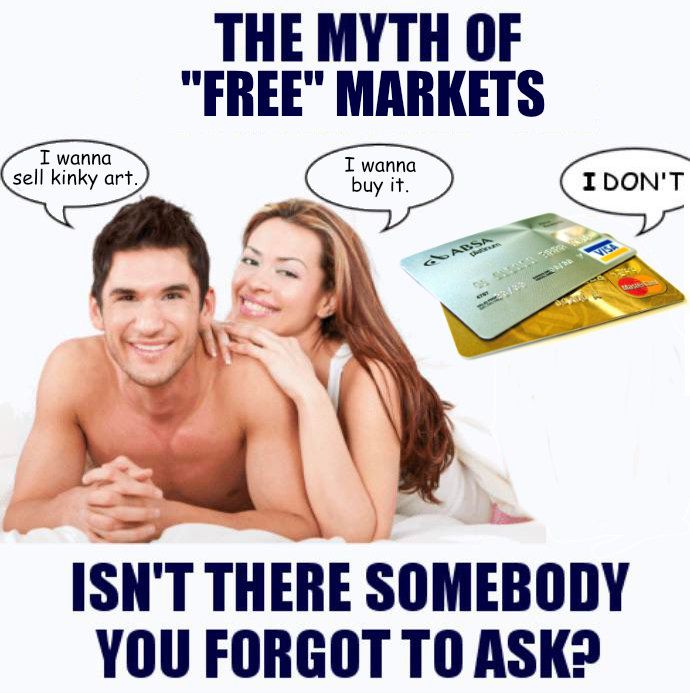
Direct sales is always difficult for us erotica writers because the final boss are credit card companies Mastercard and Visa. And they don't like the smut. So as long as you want to offer credit card payments, it's always possible they'll crack down and suspend your account. Same with all deriving payment platforms that use credit cards like PayPal and Stripe: erotica isn't allowed. Which leaves us with the option to use a payment processor of our choice until suspended, using a payment provider for the adult entertainment industry at the cost of higher fees and the drawback that even with them there might remain certain content that isn't allowed, or restrict yourself to bank transfers only, which is inconvenient for many reasons but especially if you have international customers.
I've been looking at multi-currency bank accounts but many of them don't allow "adult content" either. I haven't found a service that fulfils my criteria yet.
Crypto currencies are free of the restrictions set by Mastercard and Visa, which is why PornHub only accepts crypto right now, but that is a whole other can of worms and I personally would prefer not having to use crypto currencies because the risk for scams is high and the cost to the environment is also high.
So our best bet is an eCommerce platform that doesn't outright ban all adult content and hope it won't get suspended. I'm personally using PayHip and my experience with them is very good. I have all my erotica in my PayHip store with some risqué cover images and I haven't had any problems yet but their Terms of Service say "We do not allow any of the following content: Pornography, [...] Webcam shows and other similar sexual services" so I'm dancing at the edge of an abbyss with them as well because other platforms have deemed my cover images "pornography" in the past.
Things that are nice about PayHip is that all information they hold about us is stored on secure servers in the EU, and, unlike retailers, they let us see the email address of the person purchasing our stuff, and the fees seem fair: they just take a 5% transaction fee. Though PayPal and Stripe will charge their own transaction fee, so while a $2.99 eBook should yield a $2.84 profit, you might end up receiving less if the transaction was completed through Stripe or PayPal. Something that is also very nice is that PayHip pays out immediately, so you get paid after each sale. You can also sell things other than eBooks via PayHip, for instance if you have your own merch.
Platforms that ban adult content (incomprehensive list): BuyMeACoffee, Gumroad
Ko-Fi is like PayHip where you might get away with it because they don't explicitly ban erotica. Also itch.io is essentially the same category as PayHip and Ko-Fi. They all use the same payment processors, after all. 🫠
If you found this guide helpful, let me know because I'm an attention whore. If you want more, you can sub here, either for free or even toss me a coin if you like.
Love,
Aimée
